
10 Essential Questions to Ask Your Vehicle Wrapper Before You Sign
- Usama Saghar
- May 30
- 12 min read

A vehicle wrap isn't a sticker. It's a high-stakes engineering project. One wrong move results in peeling edges, faded graphics, or permanent paint damage that guts your resale value. You've worked hard to build your brand. You can't afford a mobile billboard that looks like a DIY disaster after three months on the road. We understand the pressure to get this right. You need a flawless, durable finish that delivers a clear ROI without the hidden costs of vehicle downtime.
Mastering the technical vetting process is the only way to protect your fleet. By knowing the right questions to ask your vehicle wrapper, you shift from a passive buyer to a strategic partner. You deserve professional accountability and a wrap that survives the UK's toughest conditions. This guide breaks down the ten essential queries you must pose before any vinyl touches your van. We'll cover material grades, installation certifications, and the fine print of manufacturer warranties. Let's ensure your next wrap is a high-performance asset that drives growth for years to come.
Key Takeaways
Protect your brand equity and vehicle resale value by vetting installers before they touch your fleet.
Identify the specific grade of vinyl and UV overlaminate required for a finish that lasts five to seven years.
Learn the technical installation methods, like knifeless tape, that prevent permanent blade damage to your factory paintwork.
Discover the critical questions to ask your vehicle wrapper regarding liability insurance and the difference between material and labour warranties.
Transform your commercial vehicles into high-performance marketing assets by leveraging 30 years of technical application expertise.
Table of Contents
Why Vetting Your Vehicle Wrapper Protects Your Business Investment
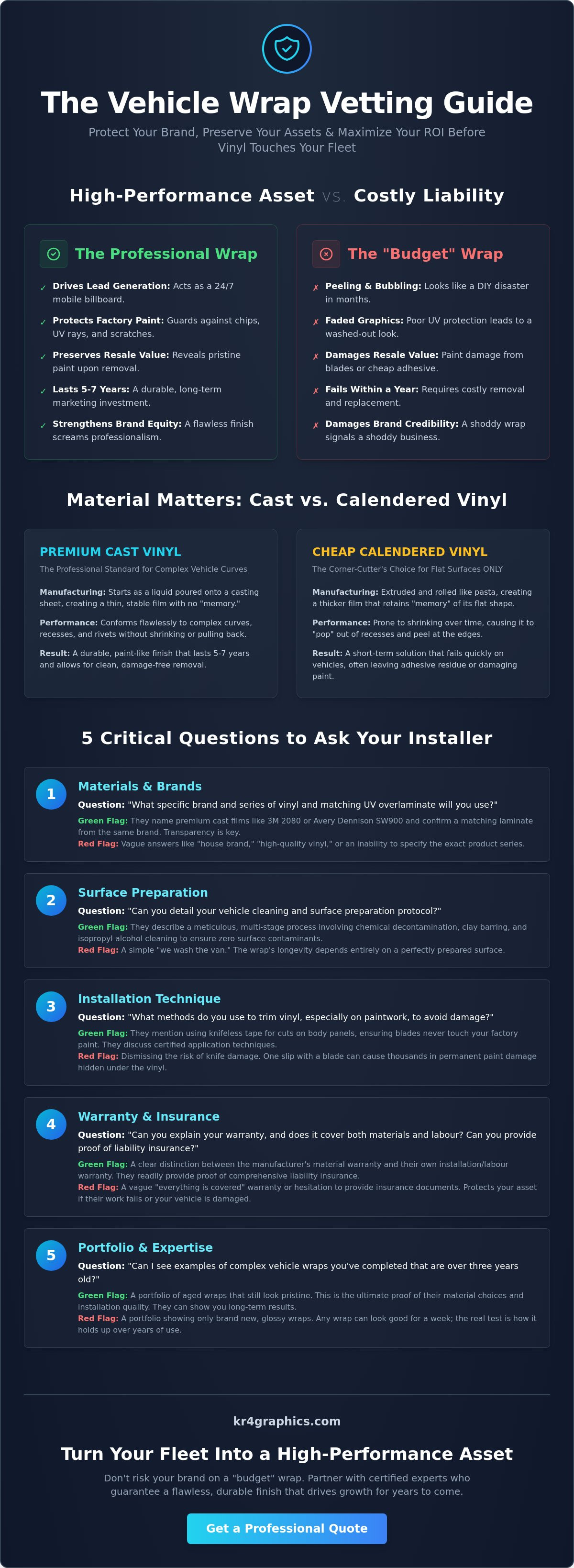
Your fleet isn't just transport. It's a high-impact mobile billboard. Every mile driven through the West Midlands is a chance to capture attention or lose credibility. A shoddy wrap screams amateur hour. It peels. It bubbles. It fades under the sun. This damages your brand perception before you even step out of the van. Vetting your installer is the difference between a high-performance marketing asset and a costly liability. Knowing the right questions to ask your vehicle wrapper ensures you aren't paying for a temporary sticker that fails within a year. Commercial downtime is expensive. You need the job done right once, not twice. A professional wrap is a strategic investment. A "cheap" alternative is just a future expense.
The ROI of a Professional Finish
A plain white van is a missed opportunity. Turning that blank canvas into a lead machine requires more than just a logo. Professional vehicle graphics generate passive leads every single day. The design must be sharp. It needs a rhythmic, staccato impact that viewers can digest in three seconds at a traffic light. Cluttered layouts fail. High-octane visuals win. This total transformation converts your overhead costs into a strategic investment. It's about scale. It's about impact. It's about professional competence that reflects your own business standards. When your fleet looks elite, your services feel premium. You aren't just driving; you're dominating the local market.
Asset Protection vs. Surface Decoration
Don't view a wrap as mere decoration. It's a protective shield. A high-quality Vehicle vinyl wrap guards your factory paint against UV rays, stone chips, and minor abrasions. This is critical for resale value. When it's time to refresh the fleet, you want to peel back the vinyl and reveal pristine paintwork underneath. Cheap, calendered vinyl shrinks and leaves adhesive residue that can ruin the surface. This is why the technical questions to ask your vehicle wrapper must focus on material grades. We only talk about premium cast vinyl. It conforms to curves without tension. It prevents rust. For business owners in Aldridge, this isn't just a purchase. It's a tax-deductible asset that preserves the life of your vehicles while building your brand's future.
Quality lasts. A 12-month "budget" wrap will cost you more in removal and replacement than a 5-year professional installation ever will. Precision matters. Durability is non-negotiable. By vetting your wrapper now, you secure the long-term value of your physical assets.
Technical & Material Standards: What is Under the Surface?
Visuals grab the eye, but the material determines the lifespan. You cannot judge a wrap by the first day of application. The real test happens six months later on a motorway in the rain. Most failures start with poor material choices. Identifying the technical specs is the core of the questions to ask your vehicle wrapper. If an installer offers "unbranded" or "house" vinyl, they are cutting corners at your expense. These films lack the structural integrity of premium cast materials. High-performance branding requires high-performance components. Don't settle for mystery materials that turn your fleet into a liability.
Question 1: "Which specific brand and series of vinyl do you use?"
Question 2: "Do you use a matching overlaminate for UV protection?"
Question 3: "What is your cleaning and surface preparation protocol?"
Transparency is non-negotiable. Reputable shops will name-drop brands like 3M or Avery Dennison. They will specify the series, such as 2080 or SW900. This isn't just jargon. It is your guarantee of quality. Understanding these details is a vital part of consumer protection against wrap scams that target uninformed business owners. If they can't show you the box the vinyl came in, keep looking.
Understanding Cast Vinyl vs. Calendered
Cast vinyl is the industry gold standard for complex vehicle curves. It starts as a liquid and is poured onto a casting sheet. This process creates a film with no "memory." It stays exactly where it is placed. Calendered vinyl is manufactured like pasta, squeezed through heavy rollers. It is thicker and cheaper. Over time, it tries to return to its original flat shape. It shrinks. It "pops" out of recesses. This leads to dirt ingress and total wrap failure. For any professional full van wrap, cast is the only acceptable choice. Outgassing is the critical 24 to 48-hour period where solvents from digital printing evaporate before lamination; skipping this step traps gas and causes immediate bubbling.
The Role of Overlaminates
Laminates are the invisible shield for your graphics. They provide the necessary UV protection to prevent your brand colours from bleaching in the sun. In the West Midlands, road salt and industrial grime are constant threats. A matching overlaminate seals the print and provides a barrier against chemical abrasion. Matte, gloss, and satin finishes all offer different aesthetic vibes, but they also require specific maintenance. Matte surfaces are porous and hold onto dirt more easily than gloss. Crucially, the laminate must match the base vinyl brand. Mixing a 3M base with a cheap generic laminate is a recipe for chemical rejection and delamination.
Precision in materials leads to precision in results. Every layer must work in harmony to ensure your brand remains vibrant for years. If you want to see the difference premium materials make, check out our work on high-impact vehicle graphics.
Evaluating the Installation Process: Beyond the Pretty Pictures
A pristine finish starts with a pristine environment. Walk into the shop and look down. If the floor is covered in dust and debris, walk out. Static electricity turns every speck of stray grit into a permanent bump under your vinyl. Lighting is equally critical. You need high-output, directional LEDs to spot imperfections before the vehicle leaves the bay. These environmental factors are the first questions to ask your vehicle wrapper. If they aren't working in a climate-controlled, dust-free zone, your investment is at risk. Temperature matters. Vinyl won't bond correctly in a cold garage. It needs a stable environment to ensure the adhesive activates for a long-term hold.
Question 4: "Do you use knifeless tape or do you cut directly on the paint?"
Question 5: "What parts of the vehicle do you disassemble for the wrap?"
Question 6: "Is the installation performed in a climate-controlled, dust-free environment?"
Precision requires a controlled workflow. Your list of questions to ask your vehicle wrapper should always include their trimming technique. Amateur shops often cut corners by cutting on the vehicle, which leads to expensive damage that you won't see until the wrap is removed years later.
The "No-Blade" Guarantee
Knifeless tape is a technical game-changer. It's a high-strength filament that cuts through vinyl from the underside. No blades. No scratches. No hidden rust. When an installer cuts directly on your paint, they leave micro-scores in the clear coat. Moisture gets in. Rust follows. This is why vinyl wraps in professional motorsports have become the standard; they offer speed and protection that traditional paint cannot match without the risk of surface damage. Ask to see a demonstration of their trimming technique. If they can't show you knifeless tape in action, they're using outdated, risky methods.
Disassembly vs. Tucking
A truly seamless full vehicle wrap requires professional disassembly. Door handles, wing mirrors, and light clusters must come off. Tucking vinyl around these obstacles creates tension. Tension leads to lifting. Removing hardware allows the vinyl to wrap around the edges for a factory-look finish. Yes, this adds to the project timeline. It impacts the final quote. But it's the only way to ensure the wrap doesn't fail at the first jet wash. Ask which parts they remove. If they plan to "just tuck it," they're planning for a finish that won't last the season. We believe in total transformation, and that requires a deep, technical commitment to the process.
Warranty, Insurance, and Aftercare: Ensuring Long-Term Value
Your signature shouldn't be the end of the conversation. It's the start of a multi-year partnership. You need to know what happens when the road salt of the West Midlands hits your vinyl in mid-winter. Professional accountability means having clear answers to the final set of questions to ask your vehicle wrapper. Don't leave your investment to chance. A handshake isn't a guarantee. You need written protocols and ironclad insurance. High-quality wraps are designed to last five to seven years, but only if the aftercare is handled with precision. Protect your assets by demanding transparency before the first panel is applied.
Question 7: "What is the difference between your material warranty and your labour guarantee?"
Question 8: "Are you fully insured for vehicle custody and public liability?"
Question 9: "Do you provide a written aftercare guide for my drivers?"
Question 10: "What is your process for wrap removal in three to five years?"
The Two-Tier Warranty System
Understand the split. Manufacturers like 3M or Avery Dennison cover the material against fading or cracking. This is your material warranty. In the UK climate, vertical surfaces often carry a 12-year warranty, while horizontal panels like bonnets may only be covered for 6 years due to higher UV exposure. The shop covers the labour. This includes lifting, bubbling, or peeling. A "lifetime warranty" is a major red flag. It's usually a hollow marketing gimmick designed to avoid specific technical accountability. Reputable installers typically offer a 1-year workmanship guarantee to ensure the application holds firm through every season.
Safe Removal and Fleet Turnover
Removal is just as technical as installation. It requires controlled heat and specific chemical agents. Done wrong, it leaves "ghosting" or thick adhesive residue that guts the vehicle's resale value. Professional removal ensures the factory paint remains pristine. This is the ultimate goal of a strategic wrap investment. To maintain a unified brand presence across your entire business, your site signage and pvc banners should mirror your vehicle's high-octane design. Consistency across all physical assets builds authority. Don't let a poorly executed removal process turn your fleet turnover into a financial headache.
Secure your fleet's future with a partner who understands the long-term lifecycle of vinyl. Consult with our technical experts at KR Graphics today.
The KR Graphics Advantage: 30 Years of West Midlands Expertise
Experience is the ultimate filter. In an industry where "garage" operations often vanish overnight, 30 years of survival means something. It means precision. It means reliability. It means technical dominance. When you prepare your questions to ask your vehicle wrapper, look for depth. You want answers born from three decades of elite application. Our Aldridge facility is the benchmark for local vehicle branding. We aren't just installers. We are catalysts. We turn blank physical assets into lead-generating machines through a well-oiled production line.
We handle end-to-end transformations. Every layer matters. Every panel counts. Our expertise extends from high-octane internal wall graphics for your workspace to full-scale fleet branding for your commercial vans. We frame our work as a strategic investment, not an expense. We focus on the long-term value of high-visibility outreach. This is tangible quality you can feel. We use only high-performance, branded materials to ensure your brand undergoes a massive, high-quality transformation that lasts.
Local Accountability in Aldridge
We have deep roots. Walsall. Birmingham. Aldridge. Local authorities trust us. Construction firms rely on our precision. Why? Because we are here. We provide a physical shop for real accountability. Visit us. See the work. This isn't a remote service; it's a local partnership. We understand the aesthetics of design, but we're equally obsessed with the durability and ROI of the final product. Your success drives our production line. We don't just provide a service. We act as a partner in your brand's growth.
Ready for a Total Transformation?
Mediocrity is expensive. Your fleet deserves more than a standard finish. The questions to ask your vehicle wrapper should always lead you to a partner who values your bottom line. Bring your vehicle to our facility for a technical assessment. We offer a no-fluff approach to project management. We move quickly from business challenges to high-impact visual solutions. It's time to turn your blank canvases into powerful marketing tools. Transform your fleet with the experts at KR Graphics today.
Secure Your Brand’s Future on the Road
A high-performance vehicle wrap is a technical achievement. It demands premium materials. It requires a controlled environment. It needs an expert hand. You now have the technical vetting framework to distinguish professional installers from amateur operations. From verifying cast vinyl series to demanding knifeless tape precision, you are equipped to protect your business assets. Using these specific questions to ask your vehicle wrapper acts as your shield against costly mistakes and brand erosion. Don't settle for a temporary fix when you can invest in a total brand transformation.
Your fleet is ready for an upgrade. KR Graphics brings 30 years of industry experience and a fully insured Aldridge facility to every project. We are the specialist fleet branding experts you can trust for professional accountability and a flawless finish. Let’s turn your vans into your most powerful marketing tool. Book Your Technical Wrap Consultation at Our Aldridge Studio and take the first step toward a high-impact visual solution. Your brand deserves nothing less than elite precision.
Frequently Asked Questions
How long should a professional vehicle wrap actually last?
A professionally installed vehicle wrap lasts between five and seven years under normal conditions. This lifespan depends heavily on the technical grade of the vinyl and the level of UV exposure. Vertical surfaces typically endure longer than horizontal panels like bonnets. Ensuring you have the right questions to ask your vehicle wrapper about material durability will help you secure a finish that survives the British weather.
Will a vehicle wrap damage my original factory paint?
A professional wrap protects your factory paintwork rather than damaging it. The vinyl acts as a shield against stone chips, minor abrasions, and sun damage. This preservation is a major factor in maintaining your fleet's resale value. Problems only arise if the underlying paint is already failing or if the wrap is removed using incorrect heat levels. We ensure the surface is stable before application.
Can I put my wrapped van through a mechanical car wash?
You should avoid mechanical brush car washes entirely. The abrasive spinning brushes can scratch the protective overlaminate and catch the edges of the vinyl. This leads to immediate lifting and premature failure. Hand washing or using a touchless jet wash is the only way to maintain a flawless finish. Stick to soft sponges and pH-neutral cleaners for the best results.
What happens if the wrap gets scratched or damaged in an accident?
Damaged wraps are easily repaired by replacing individual panels. You don't need to re-wrap the entire vehicle if a door or wing gets scratched. We maintain digital records of your design to ensure a precise colour match during the repair process. This modular approach keeps your fleet looking sharp without the cost of a full re-application. It's a fast, efficient, and cost-effective solution.
How long will my vehicle be off the road during the wrapping process?
Most commercial vehicles require three to five working days to complete a total transformation. This timeline covers deep surface cleaning, precision application, and the essential post-heating phase. Rushing this process leads to immediate adhesive failure. Your list of questions to ask your vehicle wrapper should include a request for a clear production schedule. We prioritise efficiency to minimise your commercial downtime.
Do I need to inform the DVLA if I wrap my commercial vehicle?
You must notify the DVLA if your wrap changes the vehicle's primary colour significantly. This involves updating your V5C logbook to reflect the new appearance. It is a straightforward administrative task that ensures your records remain accurate. You should also inform your insurance provider. Most insurers view wraps as a professional modification that requires disclosure to maintain valid coverage and professional accountability.
Is it better to get a partial wrap or a full wrap for my business?
The choice depends on your specific branding goals and budget. A full wrap offers a total transformation and maximum paint protection for your entire asset. Partial wraps focus your message on high-impact areas like the sides and rear. Both options turn your van into a lead machine. We assess your fleet to recommend the most strategic layout for your business based on your specific visibility needs.
What is the best way to clean a wrapped vehicle at home?
Hand washing with a pH-neutral detergent is the gold standard for wrap aftercare. Use a soft microfibre mitt to lift dirt gently without scratching the laminate. Avoid high-pressure water near the edges of the vinyl to prevent lifting. Rinse thoroughly and dry with a clean chamois to avoid water spots. Regular maintenance prevents road grime from staining the surface and keeps your graphics vibrant for years.


Comments