
How Long Does a Van Wrap Last? The 2026 Durability Guide

Your commercial vehicle is a high-impact mobile billboard, not a temporary decal. Every mile should build brand equity. Most business owners ask the same critical question: how long does a van wrap last before it starts looking like a liability? You fear the unsightly peel. You worry about UV rays bleaching your brand into obscurity. You dread the potential for paint damage during removal. These are the risks of a generic approach. We demand more.
A precision-installed wrap using premium cast vinyl like the 3M 2080 or Avery Dennison SW900 series is a five to seven-year strategic skin. It's built to endure. This 2026 durability guide reveals the professional secrets to hitting that seven-year gold standard. We break down the technical factors that dictate lifespan, from climate exposure to advanced maintenance protocols. You'll gain total confidence in your material selection and a clear timeline for replacement. Stop guessing about your fleet's appearance. It's time to transform your vans into durable, high-performance marketing tools that protect your assets and drive results for years.
Key Takeaways
Discover the definitive timeline and learn exactly how long does a van wrap last when you choose high-performance cast vinyl over budget alternatives.
Identify the precise installation techniques, like post-heating and edge-sealing, that stop graphics from lifting and extend your wrap's life by years.
Master the maintenance rules that protect your investment. Don't let aggressive jet washes destroy your vehicle's professional finish or compromise the seams.
Spot the early warning signs in "Critical Zones" like the bonnet and roof. It's the key to avoiding paint ghosting during the removal process.
Understand why a strategic investment in premium materials from industry leaders like 3M and Avery Dennison is the only way to guarantee a high-impact transformation.
Table of Contents
The Short Answer: Expected Lifespan of a Professional Van Wrap
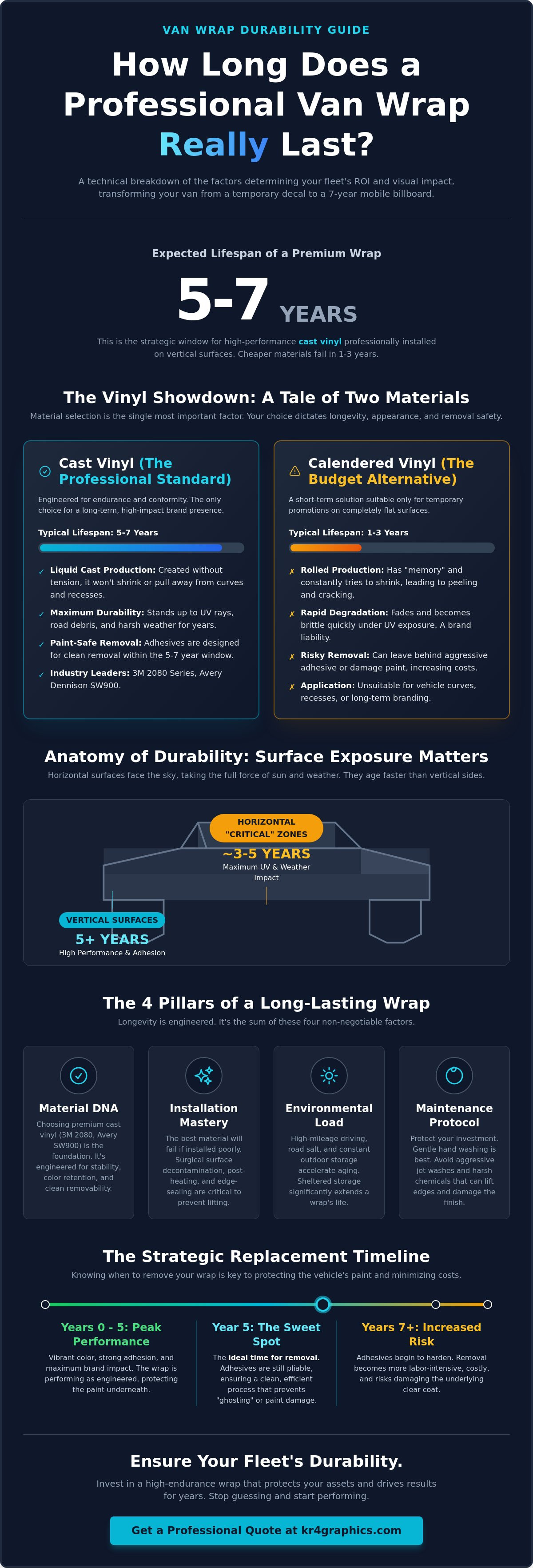
Your van is a moving asset. Its skin determines your brand's ROI. Every business owner needs a straight answer: how long does a van wrap last before the image starts to degrade? The reality is a performance window of three to seven years. It's a range dictated by material DNA and environmental combat. We don't settle for "good enough" because a failing wrap is a failing brand. Precision is the only standard that matters.
We exclusively utilise premium cast vinyls from 3M and Avery Dennison. These are the industry gold standards for longevity. Unlike cheaper alternatives, these films are engineered to endure the rigours of the road. Vertical surfaces like your van sides are the high-performers. They will typically maintain vibrant colour and rock-solid adhesion for five years or more. They stand tall against the elements while your brand remains sharp and professional.
Horizontal surfaces tell a different story. Your roof and bonnet are the primary targets for direct UV hits. They take the brunt of the weather. Because they face the sky, these sections age faster than the side panels. Expect these areas to reach their limit sooner. Understanding this distinction is the first step in managing your fleet's long-term visual impact.
The 3-Year vs. 7-Year Reality
Material selection is a business decision, not just an aesthetic one. Calendered vinyl is produced like pasta, rolled out under tension. It has a "memory" and constantly wants to shrink back to its original shape. This makes it suitable only for short-term promotional bursts of one to three years. It's a temporary fix, not a long-term solution.
Cast vinyl is the superior choice. It starts as a liquid and is cast into shape, meaning it has zero tension. It won't pull away from deep recesses or curves. This is the only legitimate choice for high-endurance fleet branding. To protect your paint and ensure a clean transition, aim for the five-year sweet spot for removal. After this point, adhesives can begin to harden. This makes a vehicle vinyl wrap significantly more difficult to strip, increasing the risk of labour-intensive removal costs.
Commercial Use vs. Private Storage
Your operational environment dictates the clock. High-mileage motorway driving subjects the front-facing vinyl to constant debris, road salt, and friction. This physical wear accelerates the aging process. Storage also plays a massive role in the survival of your graphics. A van stored in a sheltered depot overnight will outlast a vehicle parked on a residential street every time. Exposure is the ultimate enemy of vinyl. In the UK, the average UV threshold for high-performance vinyl typically triggers noticeable degradation after 60 months of constant outdoor exposure. Precision installation and high-grade materials are your only defense against this inevitable timeline.
The 4 Hard Factors That Dictate Your Wrap’s Longevity
Longevity is not an accident. It is the result of technical precision. When you ask how long does a van wrap last, you are really asking about the quality of the engineering behind the film. A wrap is a high-performance barrier. It must withstand friction, chemical exposure, and UV bombardment. We break durability down into four non-negotiable pillars: material DNA, installation mastery, environmental load, and substrate health. Compromise on one, and you compromise the entire investment.
Material grade is your foundation. Premium films like the 3M 2080 series represent the peak of vinyl technology. These cast films are designed to remain stable for years without shrinking or cracking. According to 3M's product bulletin, vertical applications can carry a durability rating of up to eight years in ideal conditions. This technical benchmark ensures your brand stays vibrant while cheaper, calendered alternatives would have long since faded into a liability.
Installation: The Invisible Durability Factor
The best material in the world will fail if the installation is flawed. Precision begins with decontamination. We strip the paint surface of every microscopic oil, wax, and silicon particle. Adhesion is a chemical bond. It requires a surgically clean environment. If the surface is compromised, the wrap will lift within months.
Post-heating is the secret to permanent memory. Once the vinyl is applied to deep recesses, we must heat it to 90°C+. This temperature "resets" the plastic memory of the film, locking it into its new shape. Without this step, the vinyl naturally tries to shrink back to its original flat state. This causes "fingering" and lifting at the edges. Over-stretching is another common failure point. Pushing vinyl too far thins the pigment and the adhesive. It creates weak spots that fail under the first sign of stress.
The West Midlands Environment
Your location dictates your maintenance schedule. In the West Midlands, our vehicles face unique challenges. The M6 is a corridor of corrosive road salt during winter. This salt spray finds every edge and seam. It acts as an abrasive that can degrade the adhesive bond over time. If you are operating near industrial zones in Aldridge or the Black Country, your van faces heavy industrial fallout. Microscopic metallic particles settle on horizontal surfaces like the bonnet and roof.
UK rain cycles contribute to "dirt tattooing." This occurs when rainwater carries grime into the tiny ledge created by the vinyl edge. If not cleaned, this dirt becomes embedded, creating a dark line that is impossible to remove. This environmental load is why a high-quality full van wrap requires a technical approach to both application and aftercare. Your wrap must be a shield, not just a sticker. Surface condition is the final piece of the puzzle. We only wrap over healthy factory paint. If your clear coat is flaking or rust is present, the vinyl will not bridge the gap. Adhesion requires a solid substrate to ensure your mobile billboard lasts the distance.
Maintenance Mastery: How to Push Your Wrap Past the 5-Year Mark
Maintenance is the difference between a five-year asset and a seven-year triumph. If you want to know how long does a van wrap last in the real world, look at the wash bucket. Hand washing is the absolute priority. It's the only way to ensure the edges remain sealed and the surface stays flawless. Automated brush washes are a disaster for vinyl. They act like sandpaper, creating micro-abrasions that kill the gloss and eventually cause the graphics to fail. We don't build brands to let them be scrubbed away by a machine.
Use only pH-neutral shampoos. Harsh detergents or industrial degreasers "dry out" the vinyl by stripping away the plasticisers that keep it flexible. Brittle vinyl is prone to cracking and premature peeling. When using a pressure washer, follow the 12-inch rule. Keep the nozzle at least 30cm away from all seams and edges. Use a wide, 40-degree fan spray. A concentrated jet will penetrate the adhesive bond and lift the film instantly. Precision in cleaning is just as vital as precision in application.
Environmental contaminants require immediate action. Bird lime, tree sap, and fuel spills are chemically aggressive. They will stain the laminate if left to bake in the sun. Wipe these away as soon as they appear using a damp microfibre cloth. Speed is your ally. Don't let a five-minute spill turn into a permanent mark on your brand's reputation. It's about protecting the visual impact you've invested in.
Cleaning Dos and Don’ts
Efficiency is key, but some tools do more harm than good. Preserving your graphics requires a strict "No-Go" list. Never use scrapers or blades to remove debris. Avoid abrasive brushes or scouring pads that can tear the film. Skip wax-based polishes on matte or textured vinyl, as they can cause uneven ghosting and ruin the finish. For stubborn road tar, use a citrus-based solvent. Apply it to a cloth, not the van. Dab the spot gently until the tar dissolves. Rinse the area with fresh water immediately to neutralise the solvent. This keeps your graphics crisp and prevents adhesive degradation.
Advanced Protection: Ceramic Coatings
Take your durability to the next level with a wrap-specific ceramic coating. This isn't just for show. It adds a sacrificial UV-shielding layer that protects the underlying pigment from the sun's rays. It's a critical upgrade for anyone wondering how long does a van wrap last under heavy operational use. The hydrophobic effect is the real winner. Water, salt, and grime simply cannot stick to the surface. Your weekly wash becomes faster and far less likely to cause swirl marks. It's the ultimate way to maintain high-impact vehicle graphics and ensure your fleet looks brand new for the duration of its service life.
Strategic Replacement: When to Peel and Refresh Your Fleet
Timing is everything in fleet management. You don't just ask how long does a van wrap last to satisfy curiosity. You ask to protect your bottom line. A wrap is a tactical investment. It serves as a sacrificial layer, shielding your factory paint from stone chips, light scratches, and UV degradation for years. However, leaving a wrap on for too long is a strategic error. The adhesive is designed to be removable within a specific window. Wait until the seven-year mark, and that bond can become permanent. The vinyl becomes brittle. Removal turns from a clean peel into a labour-intensive scrape. This increases costs and risks paint damage. Precision timing ensures your asset remains protected without becoming a liability.
Align your replacement strategy with your commercial lease cycles. Most UK businesses operate on a three to four-year lease or a 48-month resale plan. This is the optimal window for a refresh. Removing the graphics at this stage reveals "showroom" condition paint underneath. It significantly boosts the resale value of the vehicle. You've essentially shrink-wrapped your profit. If you are reaching the end of a contract, it's time to plan your transition. Don't wait for the vinyl to fail. Refresh your brand and protect your vehicle's equity simultaneously. It is a business-first approach to aesthetics.
Signs Your Wrap Has Reached End-of-Life
Monitoring "Critical Zones" is essential for fleet health. The bonnet and roof take the most abuse. Look for "crazing," which appears as microscopic cracks in the vinyl surface. This is a sign that the plasticisers have failed. Once crazing begins, moisture and dirt penetrate the film, attacking the adhesive bond. Colour fading is another red flag. If your brand colours look washed out, your mobile billboard is projecting a message of neglect. Edge lifting on rear doors or wheel arches should never be ignored. A small peel today allows road salt and water to migrate under the film. This leads to total failure. Use our full vehicle wraps guide to understand the standard of quality you should expect throughout the wrap's lifecycle.
Professional Removal vs. DIY
The temptation to peel a wrap in-house can be costly. DIY removal often leads to disaster. Amateur use of heat guns can easily burn the clear coat or warp plastic trim. Without the correct chemical solvents, you will leave behind a thick, tacky adhesive residue that is a magnet for road grime. Professional removal is a controlled process. We use precision heat management and specialised citrus-based cleaners to strip the vinyl safely. This leaves the substrate pristine and ready for its next transformation. Whether you are prepping for a sale or a total brand overhaul, professional execution is the only way to guarantee a result that protects your paint. If your fleet is ready for a new look, book a professional wrap consultation to ensure your brand stays ahead of the competition.
Why Aldridge Businesses Trust KR Graphics for High-Endurance Wraps
The West Midlands moves fast. Your branding must keep pace. We've spent 30 years mastering the technical landscape of the local signage industry. Precision is our baseline. We don't just apply vinyl; we engineer a total brand transformation. When local businesses ask how long does a van wrap last, we point to our three decades of proven results on the roads of Aldridge and beyond. We understand that a wrap is not an expense. It's a strategic investment in high-visibility outreach. Our reputation is built on the longevity of your fleet.
Quality control is absolute because we handle everything in-house. From initial design to final application, your project never leaves our sight. We refuse to compromise on materials. We strictly utilise premium Cast vinyls from industry leaders like 3M, Avery Dennison, and Hexis. These films are the only choice for high-endurance fleet branding. They offer the chemical stability and UV resistance required for the industrial zones of the West Midlands. We're obsessed with the return on investment of your final product. The technical answer to how long does a van wrap last depends entirely on the integrity of the installer.
Our Pro Installation Process
Controlled environment. Every high-impact transformation begins in our dedicated, climate-controlled application bay. Dust and temperature fluctuations are the enemies of adhesion. We eliminate these variables to ensure a flawless bond. Our technicians are highly trained specialists. They understand the complex recesses and contours of modern van models. They apply the vinyl without over-stretching the pigment or weakening the adhesive. The process concludes with a rigorous post-heat inspection. We lock the design into the film's memory. This ensures your graphics remain stable and professional for the long haul.
Transform Your Fleet Today
Look at the commercial vehicles across Walsall and Birmingham. You'll see the KR Graphics standard in action. Our work speaks for itself. We invite you to experience the difference that 30 years of expertise makes. Don't settle for a generic sticker that fades in 18 months. Choose a partner who understands both the aesthetic and technical requirements of a commercial fleet. We're ready to help you scale your brand's visibility with confidence.
Ready to elevate your brand's presence? Contact us for a durability-focused consultation. Let's turn your vans into powerful marketing tools that protect your assets and drive growth. Your brand deserves a wrap that works as hard as you do.
Dominate the Road with a Long-Term Marketing Asset
Your fleet is a physical manifestation of your brand's ambition. Don't let it fade into the background. We've established that the answer to how long does a van wrap last depends entirely on the fusion of premium materials and technical precision. By choosing high-performance cast vinyl and committing to a rigorous maintenance schedule, you transform a simple vehicle into a high-impact billboard that survives the West Midlands elements for up to seven years. It is a strategic shield for your asset.
Strategic replacement is your final advantage. Refreshing your graphics every four to five years protects your underlying paint and maintains a sharp, professional image. It's about maximizing ROI and keeping your message relevant. At KR Graphics, we bring 30+ years of industry experience to every project. We are Aldridge-based experts and premium 3M and Avery specialists. We don't just apply graphics; we engineer durability. Take the first step toward a total brand transformation today. Secure your investment with an installation designed to endure.
Get a Professional Van Wrap Quote from KR Graphics
Your brand is ready for a massive, high-quality transformation. Let's get your business moving and turn your fleet into a lead-generation machine.
Frequently Asked Questions
Do van wraps fade in the sun?
Sun exposure eventually impacts pigment, but premium wraps use UV-stable laminates to resist fading for years. Vertical panels stay vibrant longer, while horizontal surfaces like the roof take the most heat. If you're wondering how long does a van wrap last in high-UV conditions, expect the roof to show signs of lightening after four or five years. High-quality cast vinyl is designed to withstand this bombardment far better than cheaper, non-laminated films.
Can I put a wrapped van through an automatic car wash?
Avoid automatic brush washes entirely. The heavy bristles create micro-scratches in the protective laminate, dulling the finish and potentially catching the edges of the vinyl. This physical friction is a primary cause of premature failure. Stick to hand washing or low-pressure touchless systems to maintain the structural integrity of your graphics. Your brand's visual impact depends on a scratch-free, high-gloss surface.
Does removing a van wrap damage the paint underneath?
Professional removal will not damage healthy, factory-original paint. In fact, the vinyl acts as a protective barrier against stone chips and light abrasions during its service life. Problems only arise if the wrap is left on past its recommended lifespan, causing the adhesive to harden and bond too aggressively. Always ensure the removal is performed using controlled heat to release the bond safely. This leaves your vehicle in showroom condition for resale.
How much does a van wrap cost per year of its life?
Viewing a wrap as an annual investment reveals its true value. When you calculate the initial cost over a five to seven-year lifespan, the daily expense is lower than almost any other high-visibility marketing channel. It's a one-time setup for years of passive lead generation. This makes a professional installation a strategic choice for businesses focused on long-term ROI and asset protection rather than short-term fixes.
Will road salt in the UK affect my van wrap?
UK road salt is highly corrosive and can attack the adhesive edges if left to sit for extended periods. Winter driving in the West Midlands requires more frequent rinsing to prevent salt buildup along the seams. While the vinyl itself is a resilient barrier, the edges are the most vulnerable points. Regular maintenance ensures that salt spray doesn't compromise the bond, keeping your mobile billboard secure through every season.
Can you repair a small section of a van wrap if it gets scratched?
How do I know if my van wrap is "Cast" or "Calendered" vinyl?
Cast vinyl is noticeably thinner and conforms perfectly to deep recesses and curves without lifting. If your wrap is shrinking away from edges or "popping" out of body lines, it's likely a cheaper calendered film. Cast vinyl has no "memory" of being flat, so it stays exactly where it's applied. Understanding how long does a van wrap last often comes down to identifying this fundamental material difference during your initial consultation.
Should I wax my wrapped van to make it last longer?
Use only specialized aftercare products rather than traditional automotive waxes. Many standard waxes contain petroleum distillates or abrasive cleaners that can degrade the vinyl surface or cause yellowing over time. If you have a matte or textured wrap, traditional wax will ruin the finish and leave white residue. For advanced protection, opt for a ceramic coating designed specifically for vinyl to enhance UV resistance and simplify your weekly cleaning routine.


Comments