
How to Clean a Wrapped Vehicle Safely: The 2026 Pro Maintenance Guide
- Usama Saghar
- May 17
- 11 min read

Your vehicle wrap isn't just a design choice. It's a high-stakes investment in your brand's visibility. With the UK automotive wrap market projected to reach USD 1,286.6 million by 2033, protecting that asset is a mission-critical business priority. You've invested in a full van wrap or high-impact vinyl lettering to dominate the road. It's natural to worry about the wash. The fear of lifting an edge or dulling a precision finish with the wrong chemical is real. We understand the pressure.
This guide eliminates the guesswork. Master the science of how to clean a wrapped vehicle safely without compromising your graphics. We're stripping away the confusion surrounding pressure washer settings and stubborn motorway grime. You'll gain a professional maintenance routine that keeps your brand sharp and your ROI high. We're diving into technical shampoo selections and the secrets of edge-sealant pens. Turn your mobile billboard into a permanent marketing powerhouse. Results start now.
Key Takeaways
Adopt the "Two-Bucket Method" as your gold standard to eliminate grit scratches and maintain the flawless finish of your full vehicle wraps.
Learn exactly how to clean a wrapped vehicle safely while avoiding the destructive mechanical force of automatic brush washes.
Identify the "Big Three" surface enemies and master the techniques for rapid spot-cleaning to prevent permanent vinyl staining.
Treat dirt as a strategic threat; understand how proactive maintenance prevents abrasive wear and extends your wrap's lifespan.
Explore professional aftercare solutions, including ceramic coatings designed specifically to shield and enhance high-quality vinyl assets.
Table of Contents
Protect Your Investment: Why Safe Cleaning Matters for Wrapped Vehicles
Your wrap is a strategic asset. It's a high-performance skin for your brand. Treat it with precision. Knowing how to clean a wrapped vehicle safely is the difference between a five-year lifespan and a six-month failure. Safe cleaning is a non-abrasive, precision process. It preserves the integrity of the vinyl. Neglect is expensive. Dirt isn't just an eyesore; it's a microscopic abrasive. Left alone, road grit acts like sandpaper against the surface. It grinds down the finish every time the wind blows or the vehicle moves. You aren't just washing a car. You're maintaining a mobile lead-generation machine.
There's a massive gap between "clean" and "safe." You can blast a van with caustic chemicals to strip the grime. It might look clean, but you've just compromised the adhesives. Harsh solvents seep into the edges. They cause lifting. They turn a premium Vehicle vinyl wrap into a peeling liability. Professional maintenance prioritizes the chemistry of the bond. It balances surface clarity with adhesive security. Your brand stays sharp. Your investment stays protected. Don't let a cheap wash ruin a high-value asset.
The Science of Vinyl Degradation
Polyvinyl chloride (PVC) is tough, but it's not invincible. UV rays are a constant threat. They trigger a chemical breakdown in the polymer chains. When pollutants sit on the surface, the sun "bakes" them into the vinyl. This causes permanent staining and "ghosting" of the design. Unlike factory paint, vehicle graphics are porous at a microscopic level. They require specialized, pH-neutral care. Standard car waxes or abrasive polishes will ruin the texture and dull the vibrant colours. Learning how to clean a wrapped vehicle safely involves understanding these material limits.
Aesthetics vs. Asset Protection
Fleet managers must view cleaning as a preventative maintenance strategy. It's not an expense; it's an ROI safeguard. A well-maintained wrap can last years longer than a neglected one. Think about the cost-benefit. A scheduled cleaning routine costs pennies compared to a premature full-wrap replacement. Beyond the balance sheet, there's the psychological impact. A dirty, grimy van sends a message of sloppiness. High-quality maintenance reflects high-quality business standards. It shows you care about details. It tells your clients you're a professional. Every wash is a brand-building exercise.
The Golden Rules of Hand Washing Your Vinyl Wrap
Hand washing isn't just a chore. It's a preservation ritual. For full vehicle wraps, hand washing remains the undisputed gold standard. Automated systems are too aggressive. They lack the precision required to protect delicate seams. Hand washing gives you total control. It allows for a tactile inspection of the film's integrity. High-mileage commercial vans require this attention weekly. Don't let motorway salt and grime dwell. Timing is equally critical. Avoid the midday sun. High temperatures can cause soap to dry prematurely, leading to unsightly streaks and potential surface staining. Wash in the early morning or late afternoon when the panels are cool to the touch.
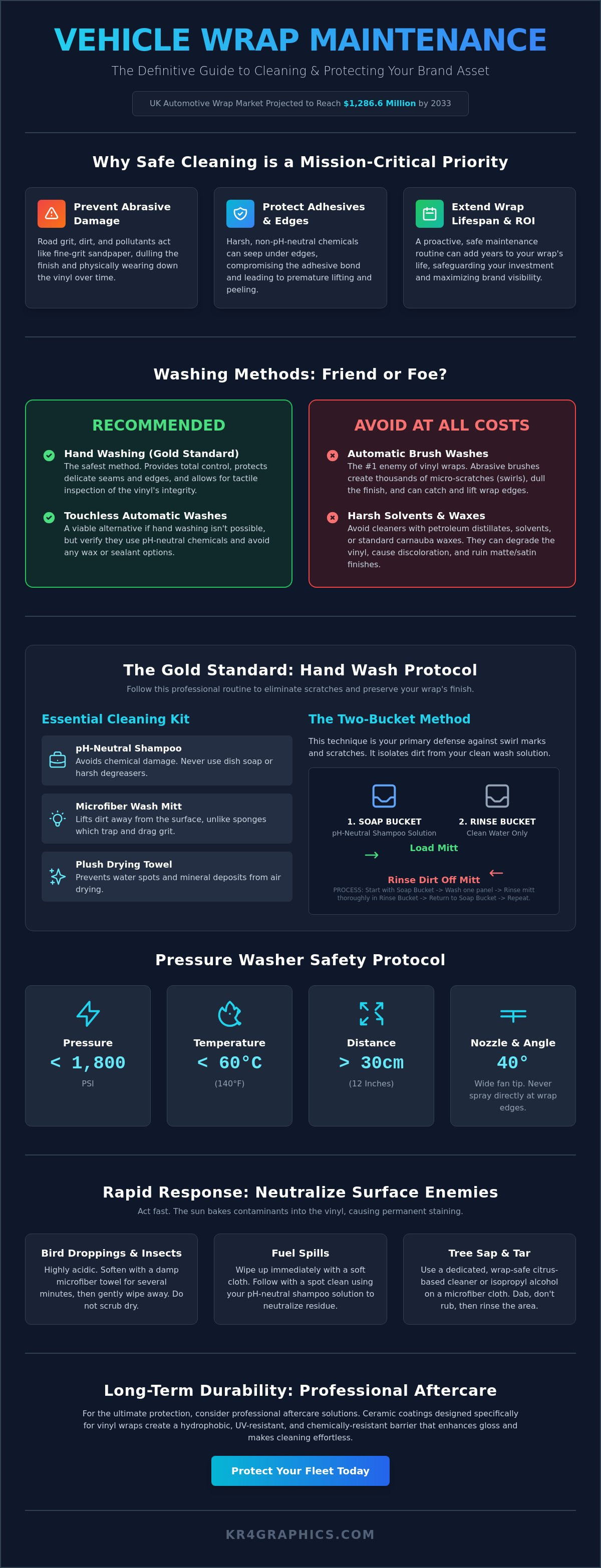
Execution is everything. The "Two-Bucket Method" is your primary defense against swirl marks. Use one bucket for your pH-neutral soap solution and a second bucket filled with clean water for rinsing your mitt. This system ensures that grit trapped in the microfibres is deposited in the rinse bucket rather than being dragged back across your graphics. This technical approach is the cornerstone of how to clean a wrapped vehicle safely. It transforms a simple wash into a professional maintenance protocol that safeguards your brand's image.
Essential Cleaning Kit for Wraps
Precision starts with the right chemistry. Skip the generic supermarket "wash and wax" products. These often contain silicones or waxes that can cloud the finish of matte or satin films. You need a dedicated pH-neutral automotive shampoo. Pair this with a high-quality microfibre mitt. Traditional sponges are too dense; they trap dirt on the surface. Microfibre lifts contaminants into its pile, away from the vinyl. Finally, invest in a dedicated, plush drying towel. Air drying is the enemy of a clean wrap. It leaves mineral deposits and water spots that can become permanent if left to bake in the sun.
Step-by-Step Hand Wash Execution
Success follows a specific order of operations. Start with a comprehensive pre-rinse to remove loose debris. Work from the top down. Let gravity carry the dirt away from clean sections. Use gentle, overlapping circular motions. Never scrub. If you encounter stubborn grime, let the shampoo dwell for a minute to break down the bond. The "rinse-wash-rinse" cycle is the safest protocol for vinyl. This ensures no chemical residue remains to compromise the film's top layer. Maintaining this level of care ensures your van sign writing graphics continue to project a sharp, professional image on every job.
Pressure Washers and Automatic Car Washes: Friend or Foe?
Automatic brush washes are the death of a professional wrap. Never use them. The mechanical force of rotating brushes is designed for hardened factory paint, not precision vinyl. These brushes act like high-speed hammers. They catch the micro-edges of your graphics and rip them from the substrate. It's a fast track to peeling seams and a ruined investment. Even touchless automatic washes represent a gamble. They rely on high-pH chemicals to strip dirt without mechanical friction. These aggressive detergents can dull the laminate and weaken the adhesive bond over time. For those serious about how to clean a wrapped vehicle safely, the only path forward is controlled, technical pressure washing.
Professional cleaning isn't about raw power. It's about precision. If you're managing a fleet of vehicles with vinyl cut lettering or magnetic vehicle signs, your cleaning crew needs a strict protocol. A pressure washer is a tool, not a weapon. Used incorrectly, it will destroy your branding faster than road salt. Mastering the settings is the first step in protecting your high-visibility assets. You must treat the surface with the same respect you'd give to a fresh engine build. Speed and care must coexist.
Safe Pressure Washing Specifications
Precision requires strict boundaries. Keep your pressure washer below 2,000 PSI (140 bar). Anything higher risks punching through the film or forcing water into the adhesive layer. Water temperature is equally vital. Cap it at 60°C (140°F). Excessive heat softens the vinyl. It makes the material vulnerable to distortion and tearing. Maintain a minimum distance of 30cm between the nozzle and the vehicle. This buffer zone ensures the impact force remains within safe technical tolerances. If you can't control these variables, stick to the two-bucket hand wash method to ensure total safety.
The Danger of the 90-Degree Angle
Geometry matters in maintenance. Never spray perpendicular to the surface. A 90-degree angle focuses the entire force of the water directly onto the seams. This is the primary cause of edge lifting. It's a common mistake that leads to expensive repairs and premature wrap failure. Instead, use a 40-degree wide-angle spray pattern. Aim the wand so the water glides across the surface rather than hitting it head-on. Keep the spray moving constantly. Static pressure leads to localized heat buildup. Mastering these technical nuances is the professional way to handle how to clean a wrapped vehicle safely while maintaining a high-impact finish for your brand.
Removing Tough Contaminants Without Damaging the Surface
In the high-stakes world of fleet branding, speed is your greatest ally. Contaminants don't just sit on the surface; they attack it. Bird lime, tree sap, and fuel spills are the "Big Three" enemies of your vinyl assets. These substances are corrosive. Left for even a few hours in the sun, they can etch into the laminate. This causes permanent "ghosting" or discolouration. This is especially true for commercial vans where fuel spills at the pump are a daily risk. Immediate action is the only way to ensure you are following the protocols for how to clean a wrapped vehicle safely. Neglect here is a choice to let your investment degrade.
For stubborn spots that regular shampoo won't touch, precision chemistry is required. A mixture of two parts Isopropyl Alcohol to one part water is the industry standard for safe de-contamination. It breaks the bond of oily residues without melting the adhesive or dulling the finish. Always test a small, inconspicuous area first. Apply with a clean microfibre cloth. Wipe gently. Never scrub. This technical approach preserves the surface tension and keeps your graphics looking factory-fresh.
Dealing with Biological Hazards
Bird lime and tree sap are acidic biological hazards. Never attempt to scrape them off. Doing so will gouge the vinyl, especially on delicate Matte or Satin finishes. Instead, saturate the area with warm, soapy water. Let it dwell for several minutes to soften the deposit. Once the bond is broken, wipe it away with a single, smooth motion. We recommend every driver carries a dedicated "spot-clean kit" in the glovebox. A small spray bottle of pH-neutral solution and a fresh microfibre cloth can save a high-value asset from a single bird dropping. Protect your van sign writing graphics by making spot-cleaning a non-negotiable part of your driver's daily routine.
UK Winter Maintenance: Salt and Grit
UK winters present a unique challenge for branding longevity. In Aldridge and across the West Midlands, road salt and grit are relentless. Salt doesn't just sit on the vinyl; it crystallises. These crystals act like microscopic wedges. They work their way under the edges of your wrap and cause premature lifting. During the winter months, your maintenance frequency must double. Pay special attention to the undercarriage and the wheel arches. Rinse these areas daily if possible. After any motorway run, the salt film must be removed immediately. This prevents the "baking" effect where road heat and engine temperatures accelerate the corrosive process. Mastering how to clean a wrapped vehicle safely during the winter is a tactical necessity for any professional fleet.
Long-Term Durability: Professional Aftercare and Maintenance in Aldridge
Your wrap is a high-performance asset. Maintenance doesn't end with a bucket and sponge. KR Graphics is your strategic partner in Aldridge for long-term durability. We don't just install graphics; we engineer longevity. Professional inspection is a tactical requirement for any serious commercial fleet. It ensures your mobile billboard stays sharp and functional for the long haul. We look for the technical details that untrained eyes miss. A proactive check-up today prevents a costly replacement tomorrow. Your brand deserves nothing less than perfection.
Understanding how to clean a wrapped vehicle safely is the foundation of care. However, professional aftercare takes protection to the next level. We focus on the chemistry of the film. We analyze the bond. We ensure your investment continues to deliver a high ROI. Don't leave your brand's reputation to chance. Trust the experts who understand the visual and tactile nature of premium vinyl.
Advanced Protection: Ceramic Coatings
Modern maintenance requires chemical reinforcement. Ceramic coatings designed specifically for vinyl create a sacrificial barrier. They shield the film from intense UV radiation and industrial fallout. For busy West Midlands fleets, this is a massive operational win. It significantly slashes cleaning time. Dirt and grime cannot bond to the hydrophobic surface. Whether you're running a high-gloss finish or a stealthy matte look, there's a specific coating to lock in that aesthetic. It's an extra layer of security for your most visible marketing tools. It makes the task of how to clean a wrapped vehicle safely faster and more effective.
When to Call the Pros at KR Graphics
Precision matters. Watch for the warning signs of environmental stress. Browning is often the first indicator of UV damage. Cracking suggests the vinyl has reached the end of its chemical life. Don't wait for total failure. If you spot edge lifting or minor tears, act immediately. Small issues can be stabilized before they escalate into a full-panel failure. We specialize in the total transformation lifecycle. When your current graphics have served their purpose, we're ready to reboot your image. Fresh branding is a catalyst for growth. It turns your fleet back into a lead-generating machine. Stay ahead of the competition with a look that commands respect.
Contact KR Graphics for expert wrap advice or a fresh fleet transformation. Let's maximize your brand's impact today.
Dominate the Road with a Flawless Brand
Your vehicle is a mobile powerhouse. Maintaining it requires more than just water; it requires a strategy. You've mastered the technical nuances of how to clean a wrapped vehicle safely. You know the power of the two-bucket method. You understand the precision required for pressure washing and the urgency of immediate spot cleaning. These protocols ensure your investment stays sharp and your brand remains undeniable across the West Midlands. Every wash is a commitment to quality. Consistency is the key to preserving that factory-fresh impact.
When you're ready to scale your impact, partner with the experts. KR Graphics brings over 30 years of industry expertise to every project. We provide Aldridge-based professional installation using high-durability commercial grade vinyls designed to withstand the toughest conditions. We don't just apply vinyl; we engineer high-impact visual solutions that drive results. Don't settle for an average appearance. Transform your fleet with high-octane graphics from KR Graphics and turn every mile into a marketing victory. Your brand’s total transformation starts today.
Expert Maintenance: Frequently Asked Questions
Can I take my wrapped van through an automatic car wash?
Absolutely not. Automatic brush washes are the quickest way to destroy your branding. The high-speed mechanical brushes are designed for hardened paint, not precision vinyl. They catch the edges of your graphics and cause immediate lifting. Stick to hand washing to preserve your investment.
How often should I wash a vinyl-wrapped vehicle in the UK?
Aim for a weekly wash. High-mileage commercial vans in the UK face constant exposure to road salt and industrial fallout. Regular maintenance prevents these contaminants from baking into the film. Knowing how to clean a wrapped vehicle safely on a regular schedule is vital for long-term ROI.
What is the best soap for cleaning a wrapped car safely?
Use a dedicated pH-neutral automotive shampoo. Avoid products containing added waxes, silicones, or harsh degreasers. These can cloud the finish, especially on matte or satin wraps. High-quality chemistry ensures the surface remains clean without weakening the adhesive bond.
Can I use a pressure washer on my vehicle graphics?
Yes, provided you follow strict technical limits. Keep the pressure below 2,000 PSI and the temperature under 60°C. Maintain at least a 30cm distance from the surface. Never spray directly at the edges of your vinyl cut lettering or seams to avoid peeling.
How do I remove bird droppings from a matte wrap without making it shiny?
Saturate the area with warm, soapy water and let it dwell. Once softened, wipe gently with a clean microfibre cloth. Never scrub or use abrasive pads. Aggressive friction will mar the matte finish and create permanent shiny spots that ruin the aesthetic.
Is it safe to wax a wrapped vehicle?
Only if you use a specialist vinyl sealant. Traditional car waxes often contain petroleum distillates that can damage the film. Never apply wax to matte, satin, or textured wraps. For these finishes, stick to pH-neutral cleaners and ceramic coatings designed for vinyl.
What happens if I spill petrol on my wrap at the station?
Fuel is a solvent that degrades vinyl rapidly. Wipe the spill immediately with a clean cloth and rinse the area thoroughly with water. Prompt action prevents the petrol from eating into the laminate and causing permanent staining or adhesive failure.
Can I use a clay bar on a vinyl wrap to remove contaminants?
Avoid using traditional clay bars on vinyl. They are often too abrasive for the top layer of the wrap. Instead, use a 2:1 Isopropyl Alcohol and water mix for chemical de-contamination. This is the professional standard for how to clean a wrapped vehicle safely without risking surface marring.


Comments