
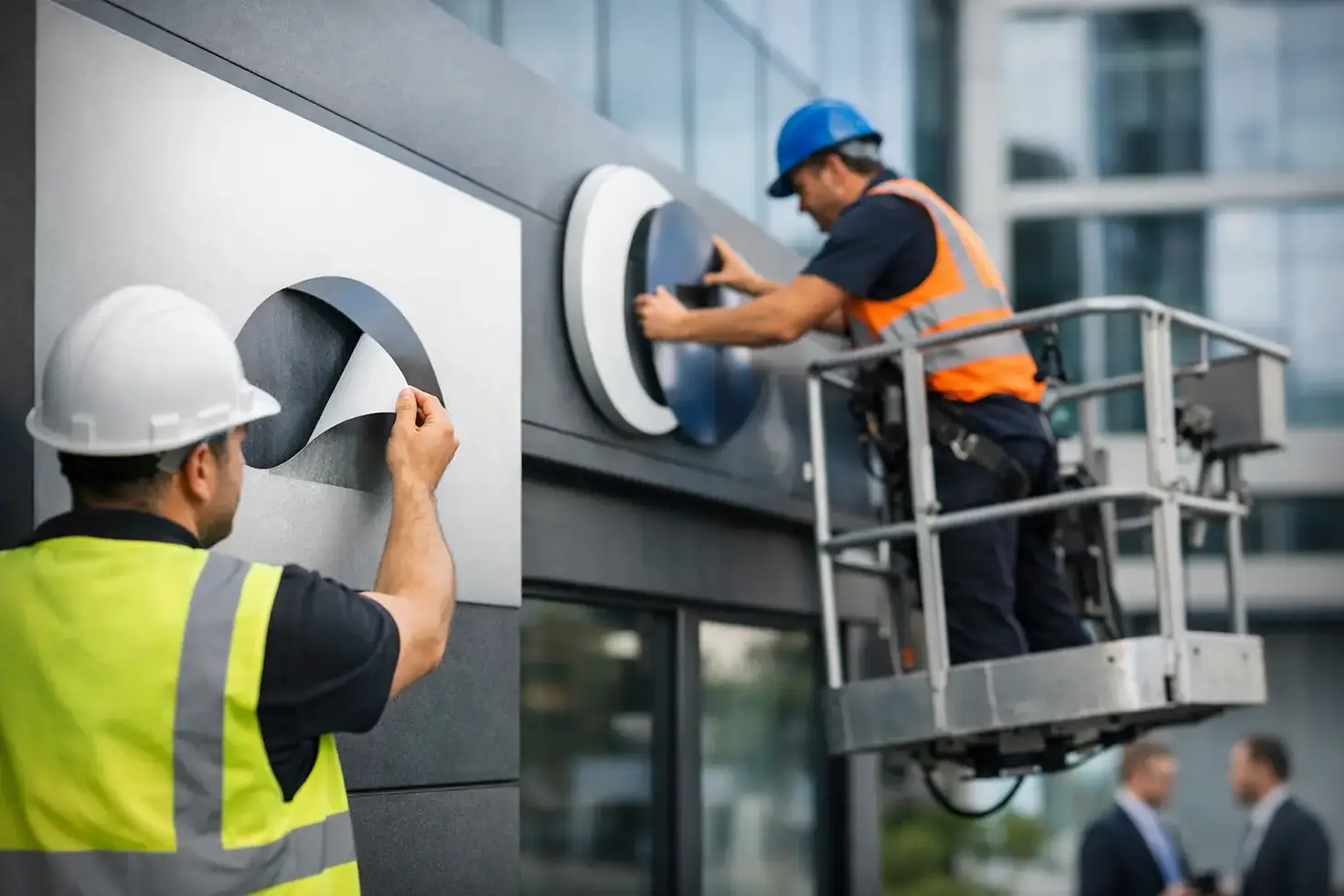
Rebranding Signs After Your Company Merger

The deal may be signed, but the merger is not visible to customers until the old identity stops appearing on gates, vans, reception walls and site hoardings. Rebranding signs after company merger is where strategy meets the practical reality of surveying locations, matching colours, producing durable graphics and installing them without interrupting normal trading.
For operations and marketing teams, this is rarely a matter of replacing one fascia board. A merged business may have two fleets, several premises, temporary construction sites, legacy wayfinding and stock held by regional teams. The job is to make every customer-facing touchpoint look intentional, not halfway through a change.
Why merger signage is a business-critical job
A company merger can create uncertainty for customers, suppliers and staff. They want to know whether the business is still operating, whether services have changed and who they should contact. Clear, consistent visual branding answers some of those questions before a conversation even begins.
A lorry carrying one legacy logo while the depot displays another makes the business look disjointed. So does a smart new reception sign paired with outdated window graphics or safety boards. These details affect perceived professionalism, particularly in construction, logistics, trade and public-sector work where clients expect organised suppliers.
There is also a practical reason to act quickly. Old branding can cause visitors to enter the wrong area, drivers to report to an obsolete name, or customers to question whether a business they recognise is still available. Where legal entities, trading names or contact details change, the risk is greater. Your signage programme should support the operational change, not trail behind it.
Start with a visual brand audit
Before approving artwork, build a complete picture of what exists. This is the point where many merger rebrands lose control: a team orders new external signs but discovers weeks later that branded trailers, meeting-room manifestations and site boards were never included.
A proper audit should cover each location and asset, recording dimensions, condition, photographs, installation method, access requirements and any information that must be retained. It should include permanent signs as well as temporary and mobile branding:
Building fascias, totems, entrance signs and directional signage
Reception displays, wall graphics, door vinyl, safety signs and wayfinding
Fleet vehicles, trailers, plant, delivery vans and magnetic panels
Windows, privacy film, glass manifestation and shopfront graphics
Construction hoardings, project boards, banners and event materials
The result should be a live schedule rather than a loose collection of photographs. Assign each item a priority, owner, budget status and target completion date. For multi-site businesses, this creates one version of the truth and prevents different branches from interpreting the new identity in their own way.
Separate urgent changes from the full rollout
Not everything needs changing on day one. In fact, attempting a total replacement overnight can waste good assets and put unnecessary pressure on operations.
The urgent work is usually anything involving the new company name, customer contact details, legal information, critical wayfinding or a prominent public-facing message. The second phase may cover internal décor, lower-profile directional signs and assets that are due for replacement anyway. If the two brands will operate together for a transitional period, temporary co-branding can be the sensible answer.
For example, a panel stating "Formerly trading as" can reassure established customers while new fleet graphics build recognition. It is useful only when the message is deliberate and time-limited. Leaving two logos in place without a clear hierarchy simply looks confused.
Build a sign system, not a collection of products
A brand guideline is valuable, but it does not automatically tell a fabricator how a logo should work on a 7.5-tonne lorry, a small van door, a brushed aluminium fascia or etched-effect window film. Every surface changes the job.
The best merger rebrands translate the identity into practical rules for scale, clear space, colours, finishes and placement. A logo that looks sharp on a presentation slide can become unreadable from the road if it is too small, placed across vehicle panel breaks or printed in a low-contrast colour. Similarly, colours need to be specified for real materials, not just on-screen values.
This is where experienced design, print and installation teams save time. They can test how brand colours reproduce in vinyl, paint, acrylic, dibond and printed film, then select finishes that suit the environment. Gloss may give a strong promotional finish on a clean fleet, while a matt laminate can reduce glare on windows or interior graphics. The right choice depends on the setting, viewing distance and expected wear.
Keep wayfinding clear during the change
A merger often brings operational changes too: new departments, shared offices, consolidated warehouses or altered visitor routes. Treat wayfinding as a functional requirement, not an afterthought.
Visitors should be able to find reception, collections, deliveries, accessible entrances and emergency routes without relying on outdated names. Keep directional messages short, use consistent symbols where appropriate, and check that replacement signs do not compromise existing health and safety information. In busy industrial settings, legibility and placement matter more than decorative detail.
Plan fleet branding around availability
Vehicle graphics are among the most visible rebranding signs after a company merger, but they are also the easiest to disrupt if planning is poor. A van cannot earn while it is off the road, and a fleet manager cannot release half the vehicles at once because artwork is ready.
Map the fleet by vehicle type, location, route pattern and availability. Group similar vehicles where possible so templates, print runs and installation methods are efficient. Then plan fitting slots around servicing, driver shifts, depot downtime or weekend access. A phased rollout often works best, starting with high-mileage vehicles and customer-facing sales or service fleets.
Do not assume that old graphics will peel away cleanly. The age of the vinyl, paint condition, previous installation quality and exposure to weather all affect removal time. A survey should flag vehicles that need extra preparation, paint correction or partial panel replacement before new livery goes on. Factoring this in early protects both the finish and the schedule.
Choose materials for the real environment
Cheap materials can look acceptable at handover and disappointing six months later. External signage must contend with rain, UV exposure, road grime, cleaning chemicals and daily knocks. Window films need the right adhesive and manifestation positioning. Site boards may need to withstand wind, mud and regular movement.
Specify materials according to lifespan and use rather than buying every item to the same price point. A short-term property transition might justify temporary printed boards. A flagship depot fascia or a heavily used fleet deserves a longer-life system with properly matched laminates, fixings and finishes.
Installation quality matters just as much. Poorly applied vinyl can lift at edges, trap air or fail around curves. Incorrectly fixed panels can rattle, stain a façade or create maintenance problems. The visible result is only part of the job; the hidden preparation is what keeps it looking right.
Manage approvals without slowing everything down
Merger projects attract opinions from marketing, directors, facilities, health and safety, regional managers and sometimes landlords. Without a clear approval route, artwork can stall or change after production has begun.
Nominate one final brand approver and one operational contact for each site. Agree artwork proofs, survey records, colour references and installation dates before production. Where premises are leased, establish whether landlord approval, planning consent or centre-management sign-off is required. These checks can affect lead times, particularly for illuminated signs or changes to a prominent building frontage.
A single supplier that handles design, production and fitting can make this process far easier to control. There is less room for artwork being interpreted differently by separate designers, printers and installers, and accountability stays clear from the first survey to the final snag check.
Make the completed rollout easy to maintain
Once the new identity is live, retain the artwork files, colour specifications, vehicle templates and sign schedule. Future branches, replacement vehicles and acquired premises can then be branded without starting from scratch. This is particularly useful for growing businesses that need consistency across the West Midlands and beyond.
Photograph completed installations and compare them against the agreed schedule. Any remaining legacy signs should have a planned removal date, not an assumption that somebody will notice them later. A small reserve of approved banner artwork, site-board layouts and window graphic designs also helps local teams respond quickly without creating off-brand materials.
A merger gives a business a rare chance to look more joined-up than it did before. Done with a practical rollout, accurate colour matching and clean installation, the new signage does more than announce a name change. It shows customers that the combined business is ready to deliver. KR4 Graphics can help turn that plan into branded vehicles, premises and workspaces that look the part from every angle.


Comments